
Glasgow is Scotland’s largest city and sits at the centre of a metropolitan region with around 1.85 million people. The wider Glasgow City Region accounts for roughly a third of Scotland’s economic output, business base, research capability and employment, giving small firms access to a large concentration of customers and professional services.
What separates Glasgow from many smaller business locations is not one individual grant, sector or organisation. It is the combination of market size, established industries, universities, innovation centres, transport connections and business support available across the city. These resources can be relevant to a company preparing to enter new markets.
A Large Market Within Scotland’s Central Belt
Glasgow’s population gives consumer-facing businesses access to a substantial local market, while its position within the Central Belt connects companies with Edinburgh and other parts of central Scotland. The combined Glasgow and Edinburgh region contains approximately 3.5 million people, creating a broader market for businesses that sell beyond the city boundary.
This scale can also support business-to-business companies. Glasgow businesses operate alongside large employers and public bodies from a wide range of industries. For a small business, this can create opportunities to supply services locally, form commercial partnerships or build a customer base before expanding elsewhere in Scotland or the UK.
A Diverse Business Economy
Glasgow is not dependent on a single industry. The city’s investment strategy identifies financial and business services, life sciences and precision medicine, the creative and digital economy, green industries, and space and satellite technology as important areas of economic development.
This variety matters because businesses often depend on activity outside their own sector. A technology company may need legal, financial, recruitment and marketing support, while a manufacturer may work with software developers, engineers and logistics providers. A diverse economy creates more potential connections between customers, suppliers and specialist advisers.
Established Financial and Professional Services
Glasgow has a significant financial and business services sector, supported by major employers and a wider network of accountants, lawyers, financial advisers, consultants and technology providers. Invest Glasgow identifies finance and business services as one of the city’s established high-productivity sectors.
For a small company, access to professional knowledge can become more important as the business grows. Decisions involving tax, employment, contracts, pensions, funding and financial management may require input from different advisers. Having a large professional-services market nearby can make it easier to find firms with experience in a particular sector or stage of business development.

Opportunities in the Creative and Digital Industries
Glasgow has an established creative economy spanning a wide range of sectors. Pacific Quay is home to major broadcasters including BBC Scotland and STV, while the city also hosts countless independent creative businesses.
This concentration can create opportunities for freelancers, production firms, technology companies and businesses supplying the sector. Creative companies still need to manage issues such as project-based income and workloads, but being located near clients and collaborators can make commercial relationships easier to develop.
Advanced Manufacturing and Engineering
Glasgow’s modern business economy continues to draw on the region’s engineering and industrial base. Advanced manufacturing, precision engineering, shipbuilding, electronics and satellite manufacturing remain important areas of activity, supported by specialist research and facilities across the wider city region.
The Advanced Manufacturing Innovation District Scotland is located near Glasgow Airport and includes the National Manufacturing Institute Scotland and the Medicines Manufacturing Innovation Centre. Its purpose is to connect research, industrial capability and companies developing new manufacturing processes. This can create opportunities for smaller suppliers and specialist firms, although access will depend on their sector, capabilities and commercial readiness.
Business Gateway and Public-Sector Business Support
Business Gateway Glasgow provides support for people starting a new business and for existing companies looking to grow. Its services include one-to-one advice, business planning resources, workshops, webinars and signposting to specialist support. It can also connect businesses with programmes covering exporting, procurement and other areas.
Glasgow City Council also publishes information about local business support, funding, recruitment, digital development, green business activity and supplier opportunities. Scotland’s public-sector support network includes organisations such as Scottish Enterprise and services funded by the Scottish Government, although the availability and eligibility rules for individual programmes can change.
Funding and Investment Options
Businesses in Glasgow may be able to explore funding through commercial banks, investors, public programmes and alternative lenders. Scottish Enterprise operates funding calls and support programmes in areas such as research, development, innovation, productivity and international growth, but funding is discretionary and businesses must meet the relevant criteria.
DSL Business Finance is a Glasgow-based, not-for-profit lender supporting new and growing companies and social enterprises across Scotland. It is one example of an alternative source of business finance, rather than a grant provider.
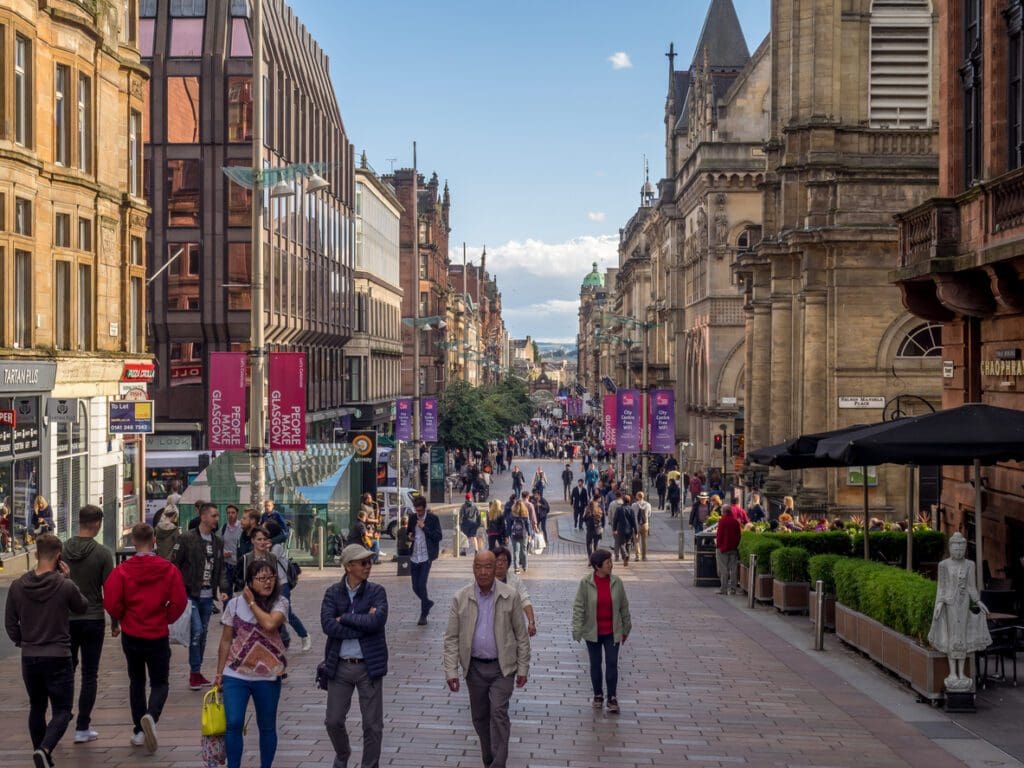
Glasgow’s Connections to Wider Markets
Glasgow is connected to the rest of Scotland and the UK through rail, motorways and Glasgow Airport. The wider region also has access to ports and freight infrastructure, which can matter to companies moving goods or working with national and international customers.
Good connections do not affect every business in the same way. A local service firm may mainly benefit from access to customers and employees, while a manufacturer or exporter may place greater emphasis on freight, airport, and motorway links. The value of the location therefore, depends on the business model and where its suppliers and customers are based.
The Practical Challenges of Running a Business in Glasgow
Glasgow’s size creates opportunity, but it also means competition. A new business may be competing with established local firms. Owners need to understand their target market, pricing and operating costs rather than assuming that a large population will automatically produce demand.
Growing companies also need to manage cash flow and investment decisions. Business and finance advisers can provide information, but responsibility for planning and management remains with the business and its directors.
What Makes Glasgow Different for Small Businesses?
Glasgow offers small businesses access to strong local networks and a well-developed support ecosystem. These advantages can create valuable opportunities, but long-term growth still depends on sound financial management. If this is something you need assistance with, let our team know, and we’ll support you with everything you need.